
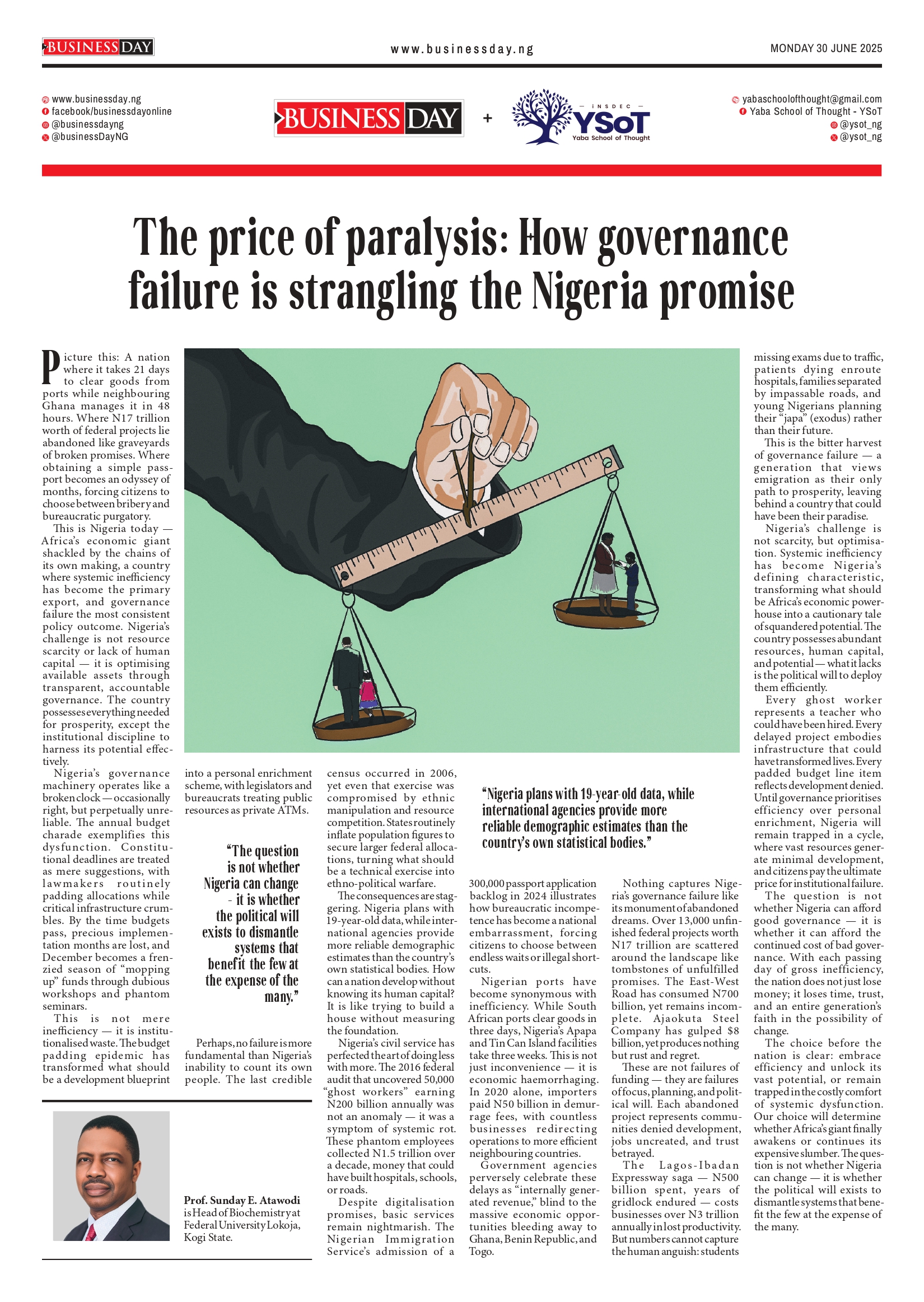
The paralysis we normalize
Nigeria loses momentum not because of a shortage of ideas, but because execution keeps stalling at the point where governance meets daily life.
From port delays to abandoned public works, the cost is measured in lost competitiveness, rising consumer prices, and eroding public trust.
Why reform feels stuck
Institutions are underpowered, incentives are misaligned, and decision cycles are too slow for a country of Nigeria's scale.
A new compact is required: one that rewards implementation, protects reformers, and measures progress in months instead of decades.
What breaks the deadlock
Start with a visible win: service delivery that people can feel within a single budget year.
Then scale accountability through digital procurement, transparent project tracking, and public feedback loops.